
[Austin, Texas] – The National Institutes of Health (NIH) has announced a major shift in its research priorities, emphasizing the development and adoption of human-based technologies over traditional animal models. This strategic pivot recognizes the growing need for biomedical tools that better reflect human biology, and it has wide-ranging implications for public health, clinical research, and the future of therapeutic development. The FDA recently announced a similar move, indicating a broader change by all regulatory bodies.
By moving away from animal models that often fail to predict human outcomes, the NIH aims to foster a more accurate, ethical, and effective research ecosystem. Human-relevant technologies—such as computational modeling, bioengineered tissue systems, and microfluidics—offer a promising path to safer drugs, more targeted therapies, and faster response to emerging diseases.
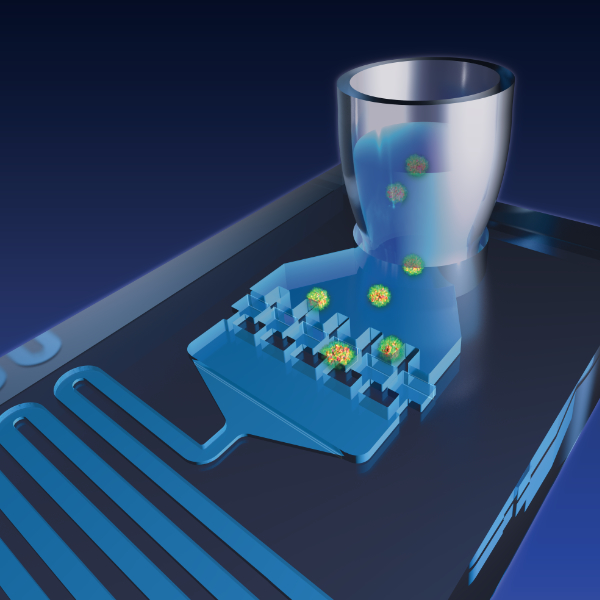
vivoVerse, a biotechnology company at the forefront of innovations in toxicology, is proud to support this national initiative. The company, in conjunction with the Ben-Yakar Research Lab at the University of Texas, has developed a transfer-less OrganoidChip platform, a microfluidic-based culturing and immobilization technology. This patented platform aims to promote healthy growth of adult stem cell-derived human organoids and automate staining, chemical treatment, and immobilize matured organoids for high-resolution imaging to facilitate high-content phenotypic analysis. The scalable OrganoidChip integrated with image analysis pipelines enables automated, real-time analysis to capture growth kinetics and subtle biological responses at individual organoid level, providing researchers with therapeutic candidates that have high translational potential.
“NIH’s new focus reinforces the direction we’ve already been heading,” said Adela Ben-Yakar, CEO of vivoVerse. “By developing scalable microfluidic systems that mimic real human biology, we’re laying the foundation for a new generation of personalized, data-rich medicine.”
vivoVerse’s technology has applications across a wide range of fields, including drug development, toxicology, infectious disease research, and precision medicine. Taken together, the company’s organ-on-a-chip platforms and organism-on-a-chip platforms (that utilize the most powerful small model system C. elegans) are designed to improve translational accuracy, reduce reliance on animal testing, and accelerate discovery pipelines.
“With this NIH initiative, the entire research ecosystem is poised to transform,” added Sudip Mondal, Director of Science. “We’re proud to contribute solutions that prioritize both scientific rigor and human relevance.”


